

Xi Jinping warns of ‘new historical injustice’ in AI—what it means for capital flows and tech competition
Xi Jinping's warning about AI inequality signals Beijing's intent to justify heavy state investment in domestic AI. The framing affects capital flows, geopolitical competition, and market access across Asia.

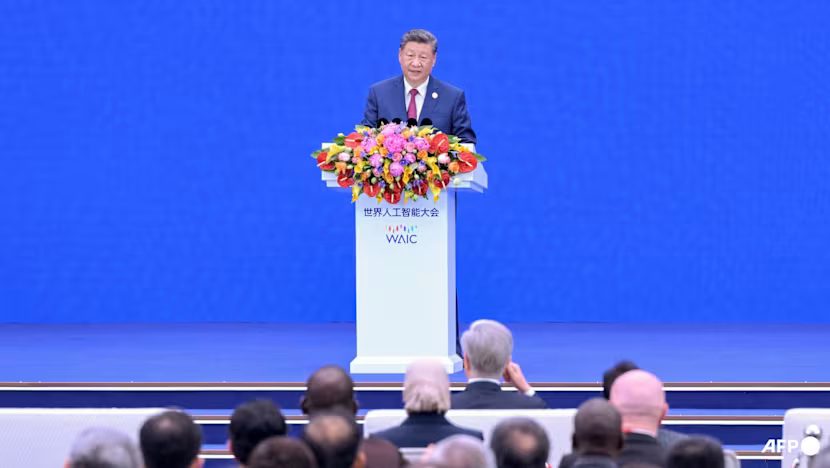
Chinese President Xi Jinping has framed artificial intelligence development as a site of potential global inequality, warning of a "new historical injustice" in how AI advances are distributed across nations. The comment, made at the World Artificial Intelligence Conference, reflects Beijing's positioning on AI governance and its own strategic push to avoid technological dependence on foreign systems.
Xi's framing centers on the risk that advanced AI capabilities could concentrate in wealthy nations and corporations, leaving developing economies and the Global South at a disadvantage. This rhetorical move serves multiple purposes: it legitimizes China's heavy investment in domestic AI infrastructure, positions Beijing as a defender of equitable technology access, and provides ideological cover for state-directed AI development.
For investors and market participants, the statement signals how Beijing intends to justify continued subsidies and preferential funding for Chinese AI companies. State support for domestic AI champions—including infrastructure spending, semiconductor allocation, and research funding—can now be framed as addressing systemic inequality rather than protectionism. This allows Beijing to pursue mercantilist AI policies while claiming alignment with developing-world interests.
The comment also reflects genuine concerns among policymakers about technological dependency. China experienced sustained pressure on semiconductor supply chains and has invested heavily in reducing reliance on foreign chip suppliers and software ecosystems. AI development, which requires both computing infrastructure and algorithmic expertise, sits at the intersection of these vulnerabilities.
Whether such inequality can be "prevented" depends on how one defines the problem. If the issue is differential access to AI tools and research, market mechanisms and open-source initiatives already allow widespread access to foundational models. If the issue is China's desire to match or exceed Western AI capabilities independently—or to export Chinese AI systems to the Global South—that is a different proposition involving geopolitics, capital allocation, and strategic competition.
For Asia-Pacific investors, Xi's warning matters because it suggests Beijing will continue directing state capital toward AI and related infrastructure. This affects venture funding dynamics, chip allocation, and M&A patterns in the region. Companies dependent on government contracts or subsidies in China may see increased support, while those perceived as serving foreign interests could face headwinds. The framing also indicates China views AI as a long-term strategic priority comparable to semiconductors or 5G—expect sustained policy attention and funding.