
White House Teleprompter Operator Under Investigation for Prediction Market Trading
A White House teleprompter operator faces investigation for allegedly using advance knowledge of Trump's speeches to bet on prediction markets, reportedly profiting $100,000 before being placed on administrative leave.

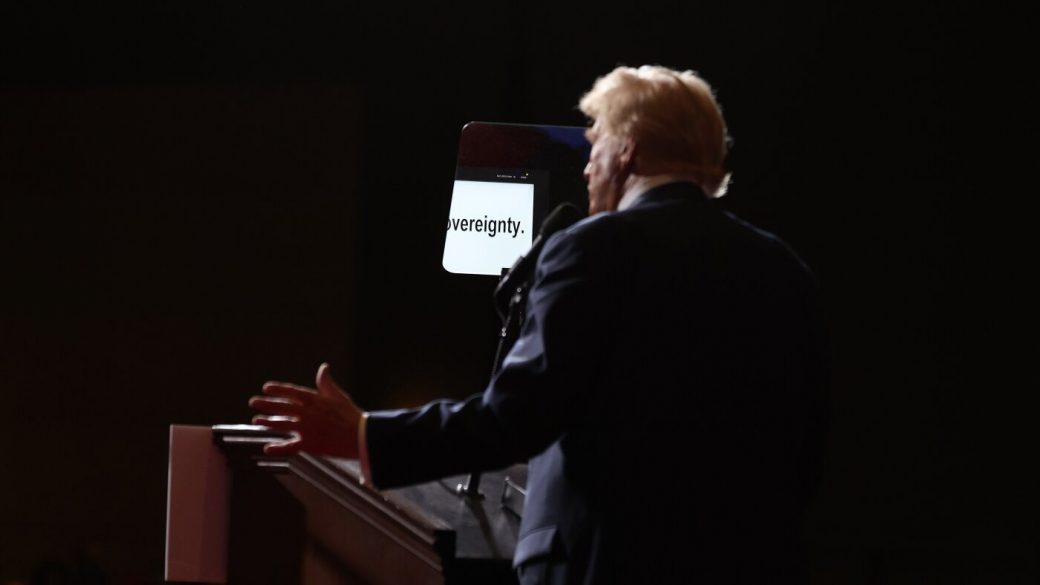
A White House teleprompter operator is under investigation for allegedly using nonpublic information to trade on prediction markets, marking the first known case of officials probing suspected insider trading from inside the White House.
Gabe Perez, who has controlled Trump's teleprompter since 2016, is accused by betting platform Kalshi of placing wagers on the president's scripted remarks. Because Perez had advance sight of Trump's prepared text before delivery, he could bet on whether specific words or phrases—such as "fake news" or "rigged election"—would appear in speeches. According to Kalshi's investigators, Perez generated approximately $100,000 in profit through this activity.
The incident was first reported by ABC News. When asked about the case, White House press secretary Karoline Leavitt said President Trump views the matter as "deeply unfortunate and, frankly, a disgrace." Perez has been placed on unpaid administrative leave and will not operate the teleprompter for upcoming presidential addresses.
Regulatory backdrop and broader enforcement pattern
In March, the White House distributed a memo to staff warning that using nonpublic government information for betting on sites like Kalshi and Polymarket violates law and could result in prosecution. The alleged violation falls under commodity trading enforcement, with Perez said to be cooperating with the Commodity Futures Trading Commission (CFTC).
Perez's case is not isolated. The CFTC has secured at least two indictments in similar situations: a Special Forces soldier who allegedly netted $400,000 betting on an operation against Venezuelan President Nicolás Maduro, and a Google employee accused of using internal company records to profit on a market predicting the most-Googled person of the year.
Researchers studying prediction markets note that insider trading on these platforms likely extends far beyond prosecuted cases, with most insiders avoiding detection.
Market scale and regulatory fragmentation
Prediction markets have grown substantially as betting platforms. Ahead of tonight's presidential address, traders on Kalshi have placed more than $1 million in wagers, betting on presidential rhetoric.
Regulation remains fragmented. The federal administration has taken a largely hands-off approach, while Congress has proposed various restrictions without passage. State-level enforcement has been more active—Minnesota has banned Kalshi entirely, and nationwide lawsuits against prediction market operators are ongoing.