

Water Becomes the New Front Line in India-Pakistan Tensions
India's suspension of the 66-year-old Indus Water Treaty has turned river access into a security flashpoint with Pakistan, whose economy depends on the basin.

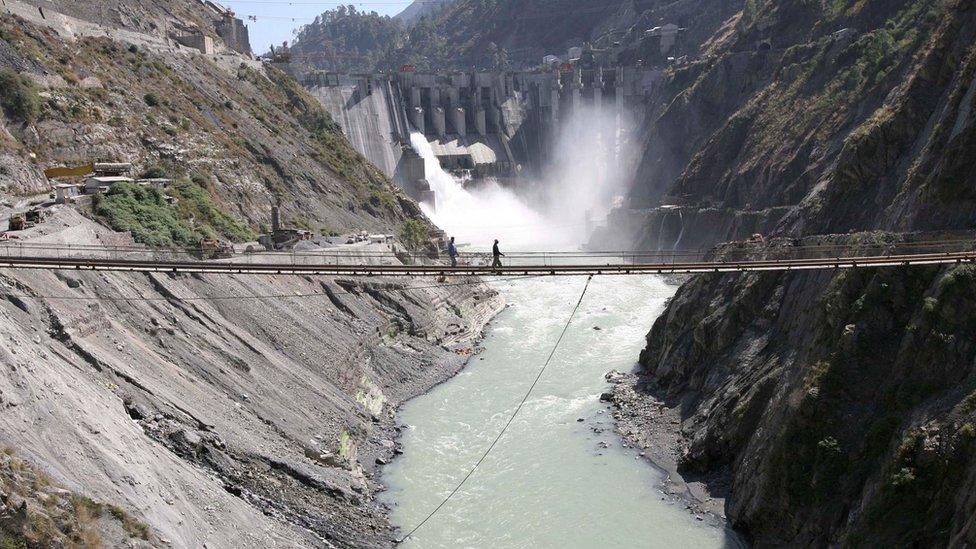
A treaty that survived three wars between India and Pakistan is now itself a source of conflict. The 66-year-old Indus Water Treaty, which divides the rivers of the Indus basin between the two countries, has stayed suspended since their military clash last year. India is pushing to terminate it outright.
The rhetoric escalated in June. Pakistan's defense minister, Khawaja Muhammad Asif, said water security could become a trigger for war. "The moment we feel our national security is under threat, and water is part of our national security, we will go to war," he told a local outlet on Friday, according to CNBC. He added that current conditions do not justify military action.
India has hardened its stance in parallel. Its foreign ministry said on June 5 that the treaty would remain suspended "until Pakistan completely stops cross-border terrorism." Days later, water resources minister C.R. Patil said New Delhi was working to stop the flow of Indus water to Pakistan, and that the country would not get a "single drop" in the coming years.
How the treaty works
The Indus Water Treaty, signed in 1960, allocates the basin's rivers between the two neighbors. India holds unrestricted rights to the eastern rivers. Pakistan receives the western rivers. The basin is shared more broadly with Afghanistan and China, but the bilateral dispute centers on India and Pakistan.
The arrangement has held through decades of hostility. Its suspension marks a shift, because water now sits openly inside the security conversation rather than apart from it.
Why Pakistan is exposed
The dependence is structural. Nine in ten Pakistanis live within the Indus basin, according to a report from the Center for Strategic and International Studies, a Washington-based think tank. The basin's rivers irrigate more than 90% of the country's crops and generate most of its hydroelectric power. All 21 of Pakistan's hydroelectric plants sit within it.
"These aren't marginal dependencies, they are load-bearing pillars of a fragile economy already in IMF bailout territory," said Arpit Chaturvedi, South Asia advisor at Teneo. Pakistan entered an International Monetary Fund program, which raises the cost of any disruption to farm output or power supply.
The limits of the threat
India cannot simply shut off the rivers. Its capacity to halt flows immediately is constrained by existing infrastructure, which was not built to store or divert water at that scale. Reema Bhattacharya, head of Asia research at Verisk Maplecroft, said the language still matters because it signals that water could become a tool of coercion.
The risk lies in timing rather than total volume. Chaturvedi said India does not need to cut all flows to cause harm. Adjusting releases from dams on the western rivers could flood farmland during planting, or withhold water during key irrigation periods and damage harvests.
There are early signs of friction over flow patterns. Chaturvedi said Pakistan has written to India twice in 2025 and once in May 2026 about abrupt, abnormal variations in the Chenab river. He added that the room to resolve the dispute through dialogue is narrowing.
What to watch
The dispute connects three pressures at once. India ties the treaty to its demand that Pakistan halt cross-border attacks. Pakistan ties river access to its definition of national security. Both governments are nuclear-armed, which raises the stakes of any miscalculation.
For now, the conflict is being fought in statements and diplomatic letters, not in dam operations. Whether that holds depends on how the two sides manage the Chenab and other western rivers through the next planting and irrigation cycles.