

Strait of Hormuz Tensions Renew Asia’s Focus on Energy Security
Renewed tension around the Strait of Hormuz has pushed energy security back to the top of policy agendas across Asia, where importers feel the exposure most.

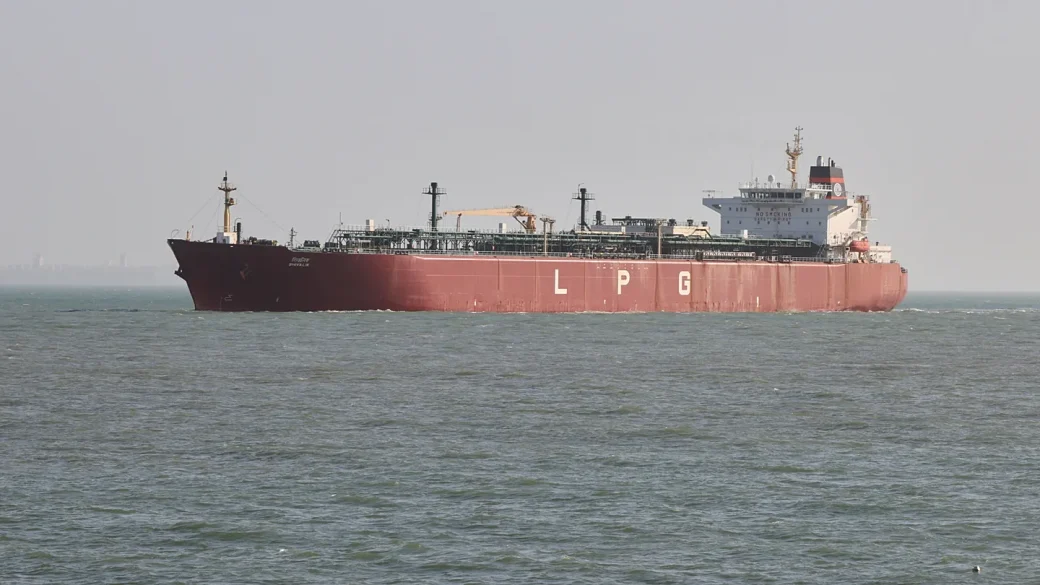
Renewed tension around the Strait of Hormuz has pushed energy security back to the top of policy agendas across Asia. The narrow waterway between Iran and Oman sits at the entrance to the Persian Gulf. It is one of the most important shipping routes for crude oil and liquefied natural gas.
For Asia's largest economies, the strait is not an abstract risk. A significant volume of the oil that flows through it heads east, toward refineries in China, India, Japan, and South Korea. Any sustained disruption would raise prices and force importers to scramble for alternatives.
Why the chokepoint matters
The Strait of Hormuz is narrow at its tightest point, which leaves little room for vessels to reroute around trouble. Shipping lanes run close to Iranian waters. That geography gives the location outsized weight in global energy markets.
Most of the crude exported by Saudi Arabia, Iraq, the United Arab Emirates, Kuwait, and Qatar passes through the strait. There are limited overland pipeline options that can bypass it, but their capacity falls well short of total seaborne flows.
When tensions rise, the immediate market signal is usually higher shipping insurance and freight rates. Tanker owners demand more to sail through contested water. Those costs eventually reach buyers.
Asia carries the heaviest exposure
Asia imports a large portion of the oil and gas it consumes. China and India together account for a substantial share of the crude moving through Hormuz. Japan and South Korea, with few domestic resources, depend almost entirely on imported energy.
This dependence shapes how the region responds. Governments hold strategic petroleum reserves designed to cushion short interruptions. Japan and South Korea maintain reserves measured in tens of days of consumption. China has built large storage capacity over the past decade.
Reserves buy time, but they do not solve a prolonged blockade. They are meant to smooth weeks of disruption, not months. That limit is why diversification matters as much as storage.
Diversification is the long-term hedge
Asian importers have worked to widen their list of suppliers. India increased purchases of discounted Russian crude after 2022, reducing its reliance on Gulf barrels. China has done the same while expanding pipeline links with Russia and Central Asia.
These shifts reduce, but do not eliminate, exposure to Hormuz. Gulf producers remain central to global supply. A price shock there would ripple through every market, including those buying from elsewhere.
Liquefied natural gas adds another layer of concern. Qatar, a major LNG exporter, ships much of its output through the strait. Buyers in Japan, South Korea, and increasingly China would feel any interruption to those cargoes.
Policy responses under review
Governments across the region are revisiting contingency plans. The options are familiar. Release strategic reserves, lean on alternative suppliers, and coordinate through the International Energy Agency where members qualify.
Naval presence is another factor. Several powers, including the United States, patrol the area to keep shipping lanes open. China has expanded its own naval activity in the broader region, reflecting its stake in stable flows.
For policymakers, the calculation is about resilience rather than prediction. The aim is to limit the damage from a disruption that may never come but would be costly if it did.
What to watch
The near-term signals are practical. Watch tanker insurance premiums, freight rates, and the pace of reserve drawdowns if tension escalates. These move faster than official statements.
Longer term, the question is how quickly Asia can reduce structural dependence on a single chokepoint. Renewable buildouts, nuclear expansion in some markets, and supplier diversification all chip away at the risk. None removes it outright in the near future.
For now, the Strait of Hormuz remains a reminder that energy security in Asia rests heavily on a few hundred kilometers of contested water.