
RTS Link Could Push Singapore Spending in Johor Bahru Up by S$1 Billion a Year: Study
Singapore residents are projected to spend an extra S$1 billion a year in Johor Bahru once the RTS Link opens, a study cited by CNA found.

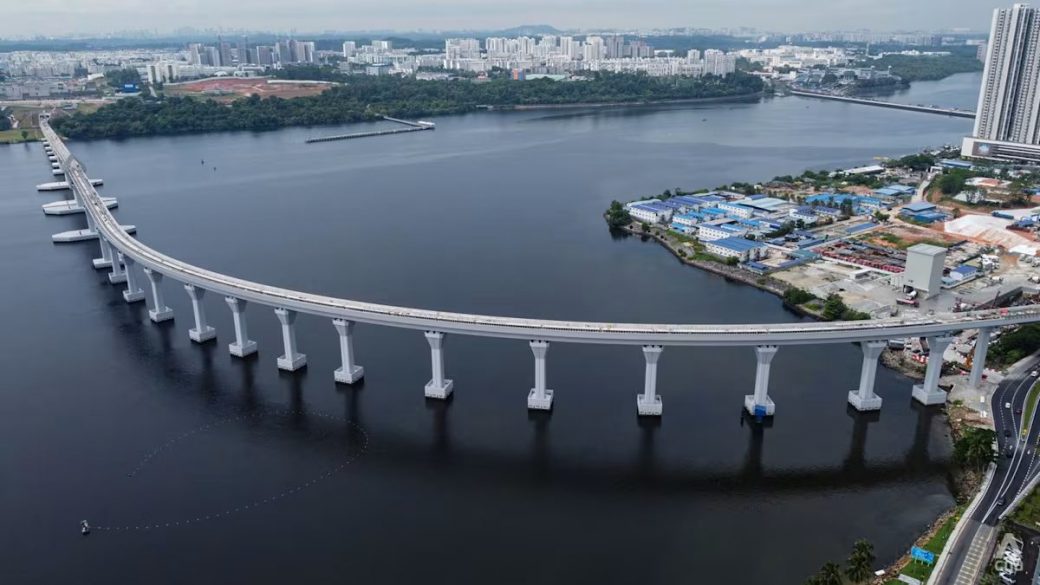
Singapore residents are projected to spend an additional S$1 billion a year in Johor Bahru once the Rapid Transit System (RTS) Link begins operations, according to a study cited by Channel NewsAsia.
The forecast points to a step change in cross-border consumer behaviour driven by faster, more predictable travel between the two cities. The RTS Link is designed to connect Woodlands in Singapore with Bukit Chagar in Johor Bahru, cutting a journey that today can stretch to well over an hour during peak congestion at the Causeway down to a few minutes on the train itself.
Why the projection matters
The appeal of Johor Bahru for Singapore residents is not new. A stronger Singapore dollar against the Malaysian ringgit has long made groceries, dining, fuel, and services meaningfully cheaper across the border. What the RTS Link changes is the friction. Long queues and unpredictable Causeway traffic have historically capped how often price-sensitive shoppers make the trip.
Remove that bottleneck, and the calculation shifts. A rail link that runs on a fixed schedule turns an occasional weekend excursion into something closer to a routine option, including for shorter trips that were previously not worth the wait.
Who is affected
The projected S$1 billion in additional annual spending represents demand that would largely be redirected rather than newly created. For Johor Bahru merchants, malls, and food operators, that is a direct tailwind. For Singapore-based retailers and F&B businesses already competing with cross-border price gaps, it adds pressure at the margin, particularly in neighbourhoods close to the northern crossing.
The figure should be read as a modelled estimate rather than a settled outcome. Actual spending will depend on ticket pricing, service frequency, the ringgit-dollar exchange rate at the time of opening, and how quickly travel patterns adjust once the link is running.
The bigger picture
The RTS Link is a joint Singapore-Malaysia project intended to ease one of the busiest land border crossings in the world. Its economic effects extend beyond retail spending to commuting, labour mobility, and property demand on the Johor side. The S$1 billion consumer-spending estimate captures one visible slice of a broader integration between the two economies that improved transport infrastructure is expected to accelerate.
Whether the additional outflow proves to be a net drag on Singapore consumption or a manageable shift will become clearer only after the link opens and a full picture of usage emerges.