
Reed Jobs’s Yosemite Chases $350M Second Fund as AI Reshapes Cancer Drug Economics
Reed Jobs's oncology-only firm Yosemite is closing a $350M second fund, building a third of its companies from scratch as AI reshapes cancer trial economics.

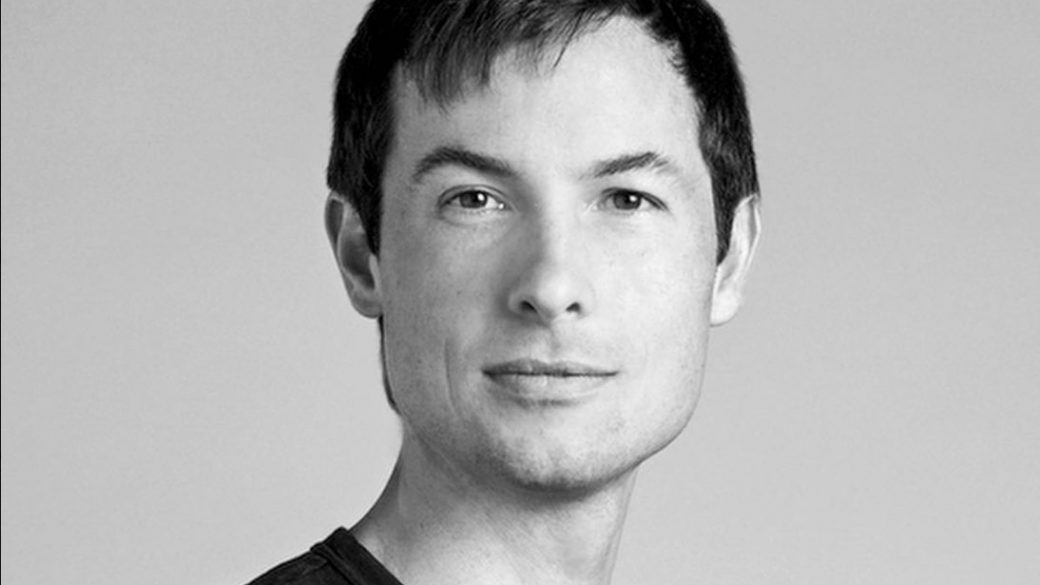
Reed Jobs's oncology-focused venture firm, Yosemite, announced the first close of a second fund targeting $350 million earlier this year, and roughly a third of that capital is earmarked for companies the firm builds itself rather than deals it joins, Jobs told TechCrunch in an interview published July 11.
The strategy sets Yosemite apart from most life-science investors. The firm works only in oncology, which Jobs pegs at 40% of biotech, and prefers to originate companies out of early academic research at institutions including Yale, Berkeley, and Stanford. Jobs said about a third of the new fund goes into companies Yosemite spins up on its own or builds alongside academics, with the remainder going to businesses started by others that the firm wants to back.
"We don't think the cures for cancer are sitting out in pharma waiting to be discovered," Jobs said, describing a model that leans on philanthropy to de-risk ideas while they are still in university labs.
Philanthropy baked into the fund structure
Yosemite allocates 2.5% of the fund's assets under management to a donor-advised fund for no-strings-attached grants, supplemented by $1 million a year drawn from management fees, according to Jobs. Two of the 20 companies in the firm's first fund came directly out of a grant.
Among the portfolio companies Jobs highlighted are Azalea, which originated from a grant to Jennifer Doudna's lab and has reached the clinic, and Quarry, built with serial founder Craig Crews around induced proximity, an approach in which a drug physically pulls a disease-causing protein toward the cell's own breakdown machinery instead of blocking it directly.
Jobs framed Yosemite's pitch to limited partners around being early. He said his team pioneered epigenetic gene editing, which changes how strongly a gene is expressed rather than altering the DNA sequence, and work on delivering gene editing safely to specific cells, a bottleneck he described as unsolved for most of a decade. Performance data, he acknowledged, remains thin. "It's extremely early for us," he said.
A shifting market for biotech capital
When Jobs launched Yosemite in 2023, the sector was still recovering from a post-pandemic crash, and the XBI biotech index sat well below its 2021 highs. He now points to lower interest rates and a wave of pharma dealmaking as reasons the opportunity has widened.
Jobs attributes much of the shift to a patent cliff, with several blockbuster drugs losing protection in a similar window while large pharmaceutical companies hold record cash reserves. He cited Eli Lilly's $7 billion acquisition of Kelonia and gains in antibody drug conjugates as recent exits. He also pointed to Revolution Medicines, which targets KRAS in pancreatic cancer, a gene long considered nearly untreatable, and said survival in the most common form of the disease has moved from 12 to 24 months over the past year. That clinical figure is worth independent verification against trial data.
Where AI enters the math
Jobs said AI has gone from a curiosity to a large part of Yosemite's work, and he is most interested in its effect on clinical trials rather than drug discovery hype. He put the cost of a Phase 3 cancer trial at about $260 million, with only one in three succeeding and patient recruitment and retention as the largest expense.
The lever he sees is the synthetic control arm, a computer-generated stand-in for the untreated comparison group built from existing patient data. If a trial only needs to recruit the active arm, Jobs argued, the required patient count roughly halves and timelines compress. He said the FDA is currently receptive to the approach.
On drug discovery specifically, Jobs was measured, calling AI a strong advancement for democratizing and accelerating science, mostly by speeding up grunt work rather than replacing the underlying research.
The NIH overhang
Jobs continued to flag federal funding risk. He said an administration last year requested a cut of up to 40% to the NIH budget, which Congress rejected on a bipartisan basis, and that a subsequent request sought a 12% reduction. For scale, he noted the largest historical cut was 1% in 2009, which he tied to roughly 7,000 lost scientist jobs. Jobs said NIH funding carries more than 90% approval and argued it should rise, floating a figure near $100 billion, noting that on a dollar basis it has stayed roughly flat for about a decade and shrunk against inflation.
He was similarly blunt about hospital technology, describing American hospitals as among the least modernized parts of the economy, with meaningful workflows still running on fax and floppy disk. He pointed to 911 triage call centers, electronic health records, radiology, and pathology as areas ripe for automation.
The questions for Yosemite's LPs are less about thesis than proof. A firm that manufactures its own companies from lab-stage research is making a longer, more capital-intensive bet than one that syndicates late-stage rounds, and returns on that approach will take years to read.