
Plastic Surgery’s Invisible Hand: How Tech and Algorithms Are Remaking the Human Face
Jia Tolentino examines how plastic surgery, AI, and social media filters have collapsed the line between natural and engineered beauty, fundamentally altering our relationship to reality and what we believe a real face should look like.

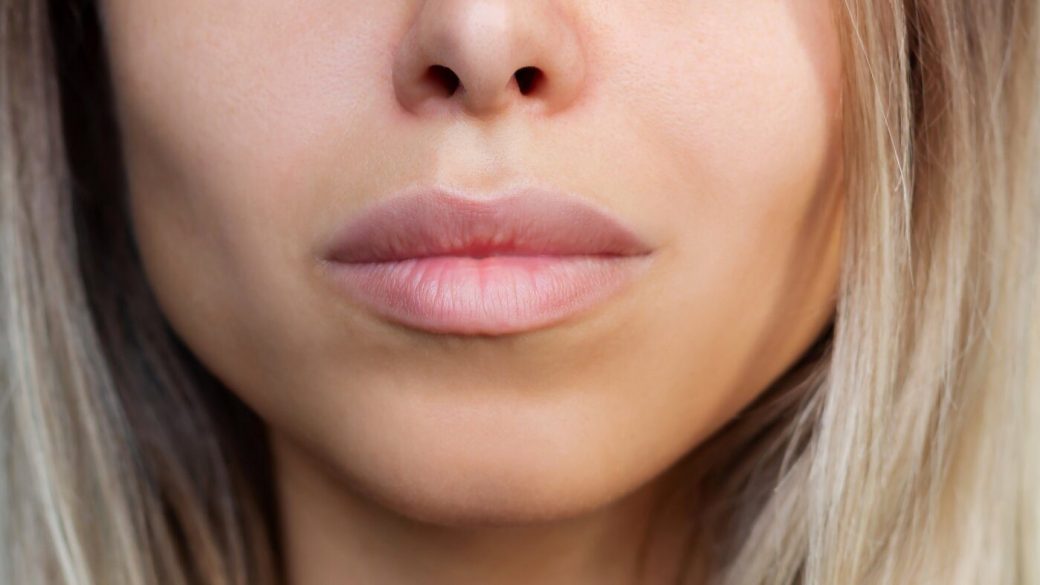
The human face is undergoing a quiet transformation. Plastic surgery in the United States has shifted from the overtly visible procedures of decades past to nearly undetectable interventions—Botox, fillers, and invisible facelifts designed to preserve a veneer of naturalness while fundamentally altering appearance.
This shift marks a departure from earlier cosmetic trends. The procedures once clustered around middle age have migrated downward; plastic surgeons report significant upticks in patients under 30, with some teenagers posting photos online and soliciting strangers' opinions on whether a facelift represents their only option.
Writer and New Yorker staff writer Jia Tolentino, who coined the term "Instagram face" seven years ago, argues that what's changing extends beyond aesthetics. The new era of cosmetic enhancement is reshaping our relationship to reality itself.
From Niche to Mainstream
Instagram face began as behavior confined to the professionally beautiful and wealthy. The concept described a singular beauty ideal that emerged across social platforms: lifted cheekbones, plumped lips, enlarged eyes, heart-shaped chins. These features mirrored the filters that Snapchat and Instagram provided—digital templates that, when applied in real life through injectables, yielded algorithmic approval and visibility.
Over the past seven years, the desire has percolated through the general population. Proxies reveal the scale: r/PlasticSurgery, a subreddit dedicated to cosmetic procedures, attracts nearly as many weekly visitors as r/running. Cosmetic clinics now operate at strip malls across mid-sized American cities outside the coasts. The procedures once exotic are becoming ordinary.
Yet the aesthetic has evolved. Where Instagram face represented a flattened convergence—Kim Kardashian, Kendall Jenner, Bella Hadid, Emily Ratajkowski blending into a singular ideal—the current wave emphasizes invisibility. Modern facelifts aim to preserve the appearance of unaltered youth, creating faces that are simultaneously lifted, filled, and reshaped yet naturalistic in presentation.
The Uncanny Valley Effect
Paradoxically, the pursuit of naturalness has produced the opposite. People scrolling social media encounter faces that register as subtly wrong: foreheads frozen mid-expression, lips plumped beyond proportion, skin textures smoothed to an artificial sheen. The cumulative effect is uncanny—present but alien.
Tolentino identifies a secondary phenomenon gaining traction among young men: "looksmaxxing," an online movement where participants document extreme interventions to optimize facial features. One influencer achieved notoriety by striking his jawline with a hammer. The practice, extreme though it appears, reflects a broader cultural shift in which the face has become a malleable product rather than an immutable given.
AI and the Recursion Problem
Artificial intelligence trained on millions of cosmetically enhanced faces is now generating new beauty standards. This creates a feedback loop: AI models learn from altered faces, synthesize new ideals based on those alterations, and those ideals circulate back to humans as aspirational references. The face as evidence of lived experience—wrinkles as markers of age, asymmetries as signatures of individuality—loses status in this cycle.
Tolentino's central argument is that cosmetic enhancement at scale has fundamentally altered what we believe a "real" face should look like. When every face can be optimized, filtered, or surgically refined, the face itself begins to lose its epistemological function. It ceases to be a window into another person's life and becomes instead a curated surface, more akin to a product than a person.
The Downstream Effects
The implications ripple outward. If facial authenticity can no longer be assumed, trust in visual evidence degrades. The face, historically humanity's primary channel for gauging age, emotion, and identity, becomes unreliable. This shift coincides with broader erosions in consensus reality—deepfakes, synthetic media, algorithmic distortion of information.
What began as a desire to look younger or more attractive has evolved into a broader reorganization of how human appearance functions in culture. The question Tolentino raises is not whether individuals should have access to cosmetic procedures—that autonomy is assumed—but what happens when enhancement becomes so normalized, so widespread, and so technologically sophisticated that the unaltered face becomes a statistical outlier.