
Philippines urges ASEAN unity against external pressures threatening regional cohesion
Philippines warns Southeast Asian nations must resist external pressures threatening ASEAN unity as foreign ministers meet in Manila amid regional conflicts and major-power tensions.

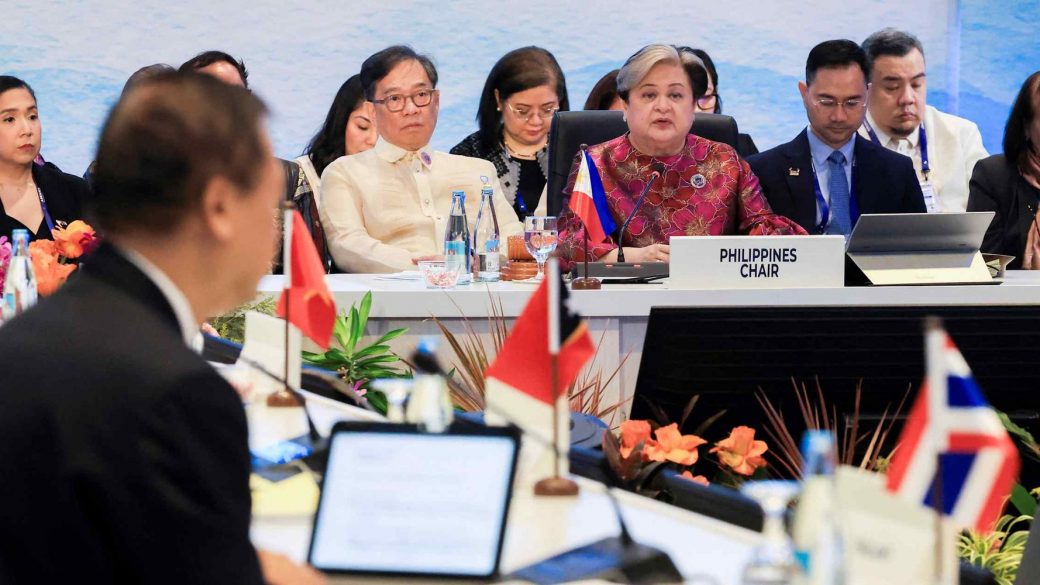
Southeast Asian nations face mounting pressure to maintain unity amid geopolitical tensions that threaten regional stability, Philippine Foreign Secretary Maria Theresa Lazaro warned Tuesday. Speaking as ASEAN chair at the bloc's annual foreign ministers conference in Manila, Lazaro emphasized the need for the 11-member organization to resist external forces attempting to fracture the group.
The gathering of top diplomats comes as multiple regional conflicts strain ASEAN's internal cohesion. The South China Sea remains a focal point of tension, with ongoing disputes over maritime boundaries and competing territorial claims. Earlier encounters between Chinese and Philippine vessels have intensified friction between members, complicating consensus-building within the bloc.
ASEAN's challenge extends beyond maritime disputes. Major-power competition—particularly between the U.S. and China—has created competing pressures on member states to align with external powers rather than prioritize regional interests. This dynamic has repeatedly tested the organization's ability to forge unified positions on contentious issues.
Lazaro's warning signals recognition that ASEAN's traditional strength lies in collective decision-making and non-interference principles. Yet these mechanisms face strain when members pursue divergent foreign policy priorities aligned with competing global powers. The Philippines, holding the rotating ASEAN chair, is positioned to broker consensus but faces structural limitations in enforcing unity when core interests diverge.
The timing of this message reflects broader anxieties about ASEAN's relevance in an era of sharpening great-power competition. Regional stability—a foundational concern for ASEAN economies dependent on open trade corridors and predictable security environments—hangs on whether member states can resist being pulled into opposing camps.