
OpenAI’s No. 2 Fidji Simo Steps Down, Leaving Altman a Gap Before Possible IPO
OpenAI's Fidji Simo is stepping down from her No. 2 role to a part-time advisory post, removing a likely successor as the company eyes a possible IPO.

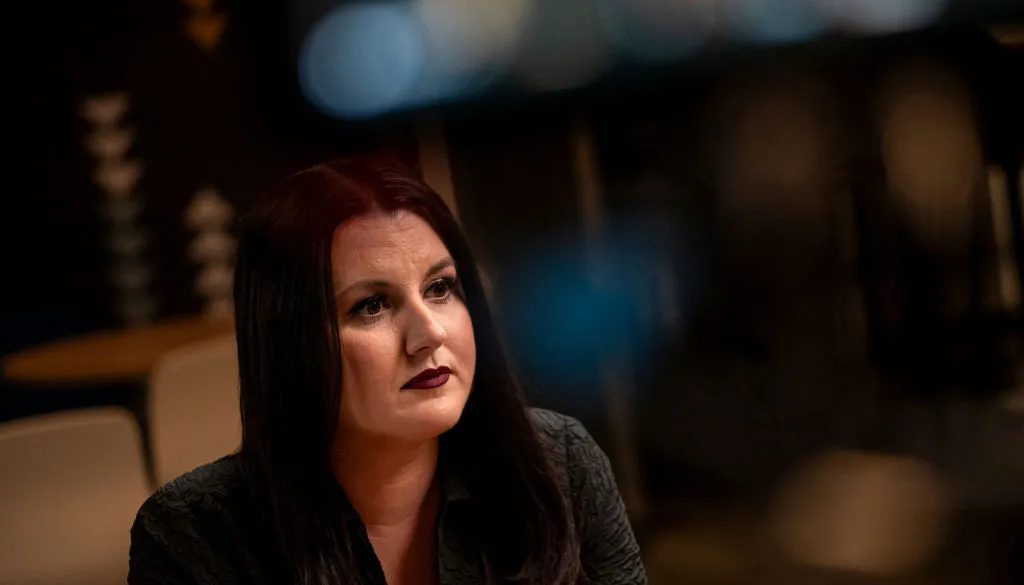
Fidji Simo, the executive who ran OpenAI's business and product operations as CEO of Applications, is leaving her full-time post and moving to a part-time advisory role, according to a Wall Street Journal report confirmed by a staff note she sent Thursday. Simo said her medical leave had lasted longer and been more difficult than anticipated.
The timing is awkward for CEO Sam Altman. Simo had been seen inside and outside the company as a likely candidate to take on broader authority once OpenAI went public, and her permanent step-back removes that option just as the company weighs a potential IPO. OpenAI was most recently assigned an $852 billion valuation.
What Simo controlled
Simo joined OpenAI's board in 2024 and came on staff in May 2025 into a newly created role reporting directly to Altman. The position consolidated the company's commercial and product functions, and it came with a reporting reshuffle: COO Brad Lightcap, CFO Sarah Friar, and CPO Kevin Weil all began reporting to her, while Altman shifted his focus to research, compute, and safety.
She arrived from Instacart, where she had been CEO since 2021 and steered the company through its 2023 IPO. Before that she spent more than a decade at Meta, including a stretch running the Facebook app.
Simo first disclosed her health situation in April, announcing medical leave for a relapse of a neuroimmune condition. That same memo confirmed Lightcap was moving into a "special projects" role and that CMO Kate Rouch was leaving to focus on cancer recovery. Weil has since departed as well.
Altman responded to Simo's announcement on X, writing that he was "really sad about this and very grateful for all fidji has done for openai."
A thin bench
For a company carrying an $852 billion valuation, OpenAI's senior ranks look sparse. Beyond Altman, the leadership includes Lightcap, Friar, and co-founder and president Greg Brockman, who oversaw product strategy during Simo's absence. Denise Dresser, who joined in December as chief revenue officer overseeing global revenue across enterprise and customer success, could plausibly expand her remit. Dresser previously spent two years as CEO of Slack and 14 years at Salesforce, Slack's parent company.
Simo's mandate centered on OpenAI's consumer business. That effort ran into headwinds late last year, when ChatGPT's growth cooled and missed internal revenue targets, pushing the company to lean harder into coding tools, a category where Anthropic still leads.
Equity and retention
Simo's exit sits against OpenAI's evolving approach to employee equity. In April 2025, the month she joined, the company cut its vesting cliff from the standard 12 months to six. In December it removed the cliff entirely for new hires, letting equity vest from day one. Simo described the change internally as a way to let staff take risks without fear of losing equity if let go early. OpenAI was projected to spend $6 billion on stock-based compensation in 2025 alone, a figure that reflects how hard the company has pushed to hold onto talent during the AI hiring war.
None of the recent departures appear linked to compensation, and executive equity packages are typically negotiated individually with distinct terms.
Simo's news landed on a crowded day for OpenAI. Earlier Thursday the company released its GPT-5.6 model family, named Sol, Terra, and Luna, alongside ChatGPT Work, an agent built to handle multistep office tasks such as drafting documents, spreadsheets, and presentations. Both launches were positioned by OpenAI as aimed squarely at Anthropic.