

How Alan Greenspan Made the Fed a Household Name
Alan Greenspan ran the Fed from 1987 to 2006 and made it a household name. That fame, as Greg Ip writes, proved both a blessing and a curse.

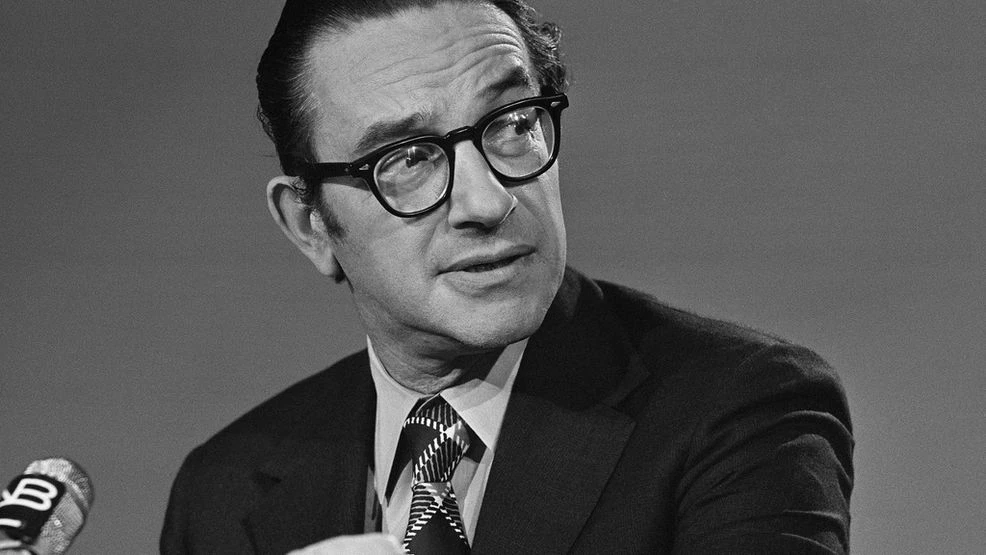
Alan Greenspan ran the U.S. Federal Reserve from 1987 to 2006. By the time he stepped down, ordinary Americans knew what the Fed was, who led it, and why its decisions mattered. That was not always true.
Greg Ip, writing in The Wall Street Journal, captured the shift with a small story. When Kevin Warsh told his father in 2006 that he had been nominated to the Fed board, his father, a small-town businessman, described the central bank as "the thing Greenspan runs." The institution had become inseparable from the man.
Warsh now chairs the Fed himself. He joined the board in 2006, just as Greenspan retired after 18 years in the role.
The first celebrity central banker
Before Greenspan, Wall Street already understood that the Fed shaped the economy. The wider public did not pay close attention. Greenspan changed that. He turned the chairmanship into a position the country watched, and he kept it there.
Phrases he popularized entered everyday speech. "Irrational exuberance," his 1996 warning about asset prices, is still used to describe markets that have run ahead of fundamentals.
The oddity, as Ip notes, is that an unelected official carried more weight than many of the elected leaders who reappointed him. Presidents from both parties kept him in the job. His authority came from outside the ballot box.
Why he held the room
Two things gave Greenspan that standing.
The first was results. His predecessor, Paul Volcker, had broken double-digit inflation through punishing interest rates. Greenspan inherited a calmer economy and drove inflation down to roughly 2%, then held it there. He also presided over what was then the longest economic expansion in U.S. history, running from 1991 to 2001.
The second was perception. Greenspan looked like he understood the economy more deeply than anyone else in the room. He read data closely and spoke about it with a confidence that markets and politicians found reassuring. That image of mastery became part of his power.
A blessing and a curse
The fame Greenspan built for the Fed cut both ways, as Ip frames it.
Prominence gave the institution influence. When the chair spoke, markets moved and policymakers listened. The Fed gained a place in national life that it has kept long after Greenspan left.
The same prominence raised the cost of being wrong. An institution that the public credits for good times will also be blamed when conditions turn. The reputation for near-omniscience set a standard that no central banker can meet indefinitely.
What it means for how we read central banks today
The Greenspan era is a useful reminder for readers outside the United States, including those tracking the Fed from Asia. Central bank credibility rests partly on measurable outcomes, such as stable inflation and sustained growth. It also rests on the harder-to-measure sense that the people in charge know what they are doing.
That second part is fragile. It can lift an institution above the politics that surround it, and it can leave that institution exposed when the next downturn arrives.
Greenspan made the Fed famous. The job of every chair since has been to manage what comes with the spotlight he switched on.