
Hong Kong Restarts Middle East Tech Push at LEAP Conference After Iran War Disruption
Hong Kong is reviving its Middle East tech outreach by hosting the Saudi-founded LEAP conference, as Chinese firms including Cornerstone Robotics eye Gulf expansion after the Iran war.

Hong Kong is reviving its business courtship of the Middle East, hosting the Saudi-founded LEAP technology conference this week as Chinese firms signal renewed interest in the region following disruption caused by the Iran war, according to Nikkei Asia.
The event, best known as a fixture in Riyadh, brought together technology companies looking to build connections between China and Gulf markets around artificial intelligence and other sectors. For Hong Kong, the conference is part of a broader effort to position itself as a bridge for Chinese companies seeking customers and partners in the Middle East, a pivot that had been complicated by regional conflict.
A restart after conflict-driven delays
The Iran war had knocked Hong Kong's Middle East strategy off course, interrupting business activity that the city had been building toward the region. Nikkei Asia previously reported that the pivot was threatened by potential spillover from the conflict, which also pushed oil prices sharply higher and raised shipping risks in the Strait of Hormuz.
With the immediate disruption easing, the LEAP gathering serves as a signal that both sides want to resume commercial ties. The presence of Chinese technology exhibitors suggests companies see the Gulf as a market worth pursuing despite the recent instability.
Robotics maker eyes Gulf expansion
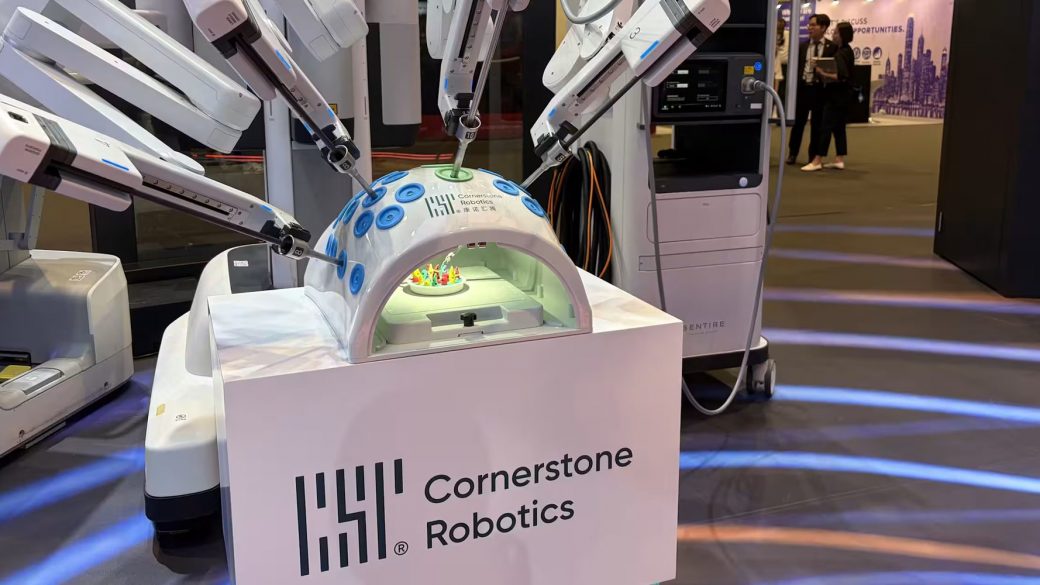
Among the exhibitors was Cornerstone Robotics, which is exploring sales of its surgical system in the Middle East alongside targets in Southeast Asia and Europe, according to Nikkei Asia. The company's interest illustrates the type of specialized hardware Chinese firms are hoping to sell into Gulf healthcare systems, where governments have been investing heavily in medical infrastructure.
Surgical robotics remains a capital-intensive category dominated by established Western players, so any push into the region by a newer entrant faces significant commercial and regulatory hurdles. Cornerstone's stated interest is an ambition rather than a confirmed deal.
Why the Gulf matters to Hong Kong
Hong Kong has spent recent years trying to deepen financial and technology links with Middle Eastern economies, courting sovereign wealth and positioning itself as an entry point for Chinese firms into the region. Hosting LEAP outside Saudi Arabia extends that outreach, giving Gulf investors and Chinese companies a venue to meet on Hong Kong soil.
The strategy depends heavily on regional stability. Renewed conflict, energy price shocks, or shipping disruptions in the Gulf could again slow the momentum Hong Kong is trying to rebuild. For now, the conference marks an attempt to move past that uncertainty and keep the China-Middle East corridor open for business.