
Bhutan Bets on High-Value Tourism to Diversify Beyond Its Best-Known Landmark
Bhutan is steering tourists beyond Tiger's Nest to spread visitor spending, but its Sustainable Development Fee keeps the high-value, low-volume model in check.

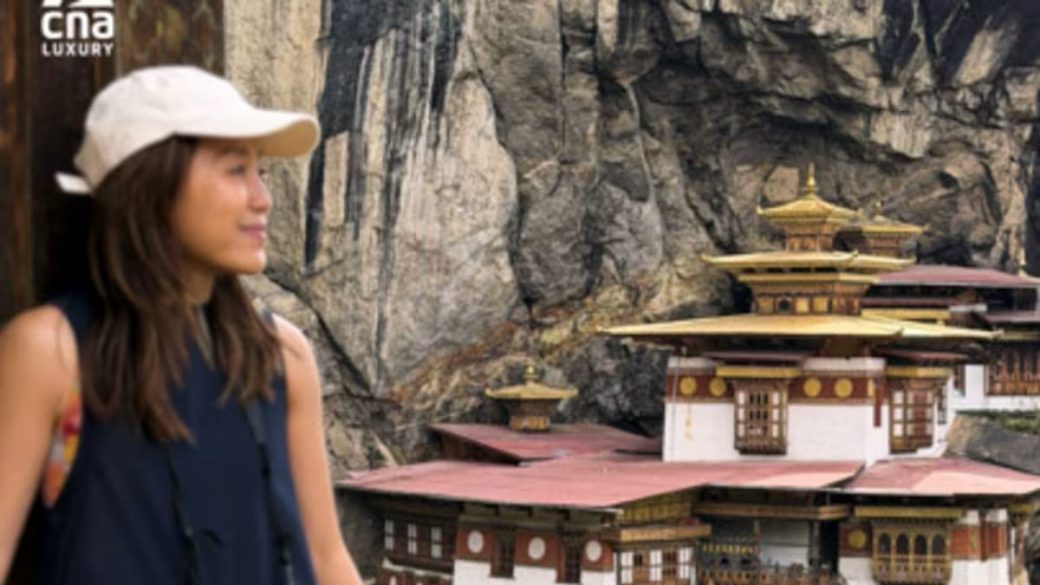
Bhutan is working to spread visitors beyond Paro Taktsang, the cliffside monastery commonly known as Tiger's Nest, as the country leans on a small, high-spending tourism sector to support its broader economy.
The framing comes from a CNA travel feature, "Bhutan beyond Tiger's Nest," which highlights the country's effort to present destinations outside its single most photographed site. The economic logic behind that push is straightforward: a landlocked Himalayan economy with limited industrial capacity relies heavily on services and hydropower, and tourism is one of the few sectors where it can capture foreign currency without competing on volume.
Why the diversification matters
Bhutan has long positioned itself as a low-volume, high-value destination rather than a mass-market one. That policy caps the number of tourists indirectly through pricing rather than hard quotas, which means the value of each visitor, and how widely they travel within the country, matters more to the economy than raw arrival numbers.
Concentrating demand on one landmark creates a fragile revenue base. If most spending clusters around a single site near Paro, regional towns and less-visited valleys see little of the tourism income. Encouraging longer itineraries is, in effect, a way to distribute economic benefit across more of the country and reduce dependence on a single draw.
The Sustainable Development Fee
Central to Bhutan's tourism model is its Sustainable Development Fee, a daily levy charged to most international visitors. The fee is the mechanism that keeps the sector "high-value" by design: it raises the cost of entry, filters for travellers willing to spend more, and generates government revenue earmarked for public services and conservation.
The policy trade-off is direct. A higher fee protects the exclusivity and environmental positioning that Bhutan markets, but it also limits how quickly the sector can scale. Any strategy to broaden where tourists go has to work within that ceiling, since the country is not trying to maximise headcount.
Who is affected
For regional operators, guides, and lodging outside the main Paro-Thimphu corridor, a successful diversification push would mean a larger share of visitor spending reaching secondary destinations. For the central government, spreading tourism supports the goal of tying economic activity to conservation rather than to volume growth.
The constraint is that Bhutan's tourism base remains small relative to regional peers, and hydropower exports to India remain the larger pillar of its external earnings. Tourism diversification is a lever for resilience and distribution, not a path to rapid sector expansion.
What to watch
The open questions are practical ones: whether marketing beyond Tiger's Nest translates into longer average stays, whether visitor spending actually reaches secondary regions, and how the Sustainable Development Fee is calibrated over time to balance revenue against arrivals. Those metrics, more than any single attraction, will indicate whether the diversification effort is changing the economics on the ground.