
Asia Set to Drive 60% of Global Growth in 2026, Led by India and Vietnam
Asia House expects Asia to anchor global growth in 2026, led by India and Vietnam above 6%, even as exports cool and trade tensions persist.

Asia will remain the largest single contributor to global economic growth in 2026, according to the Asia House Annual Outlook published in January. The region's expansion rests on domestic consumption, rising investment and rapid digitalisation, which together offset weaker external demand and a more fractured trading environment.
The World Trade Organization expects regional growth to ease to 3.8 per cent in 2026, down from 4.1 per cent in 2025. Asia House frames this as a slight slowdown rather than a reversal, with the region still on an upward path.
India and Vietnam lead the field
India and Vietnam stand out as the fastest-growing major economies, with growth above 6 per cent. The Philippines and Indonesia are both projected to grow at 5 per cent or more, with Malaysia also among the stronger performers.
China's growth is forecast to slow to 4.6 per cent in 2026. The report notes a softer pace for trade and investment, while household consumption is expected to hold up. Some analysts cited by Asia House believe China could still outperform expectations, which would lift activity across the region.
The growth story is anchored in demographics and demand. Younger populations and expanding middle classes are pushing household spending higher, while investment in manufacturing, technology and energy is reshaping industries.
Technology investment becomes a structural force
Asia House describes digital innovation as driving a structural shift in the regional economy. As Asia positions itself as a centre for artificial intelligence and semiconductors, capital is flowing into key markets.
The US-China technology rivalry dominates global attention, but the report argues it also opens space for other Asian economies. Countries that build national AI strategies and invest in infrastructure and skills can secure positions within AI and semiconductor supply chains.
A central policy lever is ASEAN's Digital Economy Framework Agreement, known as DEFA, expected to be finalised in 2026. The agreement would harmonise data flows, support cross-border digital trade and improve regulatory certainty. Asia House projects that a borderless digital marketplace could double the size of ASEAN's digital economy to US$2 trillion by 2030.
Energy transition shifts from policy to capital
The report frames the energy transition as a tangible investment shift rather than a stated ambition. China continues to lead the world in renewable deployment, and the broader push for energy security is unlocking funding for nuclear, wind and solar projects across the region.
Businesses face a more complicated compliance picture. Asia House points to a growing number of fragmented emissions trading systems that firms will need to manage across markets.
Trade buffer is fading
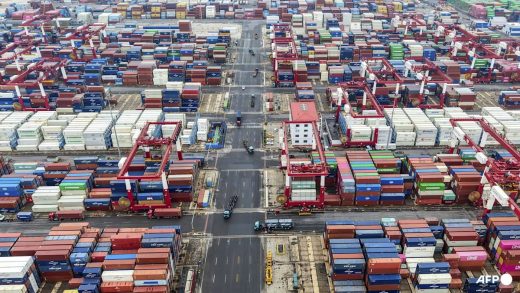
Asia's exports held up better than expected in 2025, largely because companies frontloaded shipments ahead of US tariff increases. That buffer is temporary. The report expects exports to fall in 2026 as the frontloading effect fades, particularly if importers begin passing higher costs to consumers.
Asian firms have adapted quickly so far, helped by deeper regional supply chains. Asia House cites this resilience as a reason the region can absorb softer external demand without derailing growth.
Risks on both sides of the outlook
The outlook carries macroeconomic risks that cut in both directions. A sharper-than-expected slowdown in China could spill across the region. Shifts in US inflation and changing expectations about Federal Reserve rate cuts could trigger currency volatility.
Delayed rate cuts or a stronger dollar would raise imported inflation and debt-servicing costs. Faster cuts or a more dovish Fed chair would weaken the dollar, easing debt burdens and supporting capital flows into Asia.
Geopolitics remains a concern. Asia House flags tensions across the Taiwan Strait, frictions between Thailand and Cambodia, and strains between India and Pakistan as specific security risks. Domestic unrest, including protests in Indonesia and the Philippines, has not yet dented the long-term growth narrative, though the report acknowledges that could change.
The through line in Asia House's analysis is resilience. Governments are prioritising reliable supply chains, secure energy and access to critical components, treating that stability as the foundation for sustained growth in a turbulent global economy.