

An Austrian Court Weighs a Mountaineering Death, and a Term Called ‘Alpine Divorce’
An Austrian court tried a climber for homicide by gross negligence after his girlfriend froze near Grossglockner's summit, testing when an Alpine death becomes a crime.

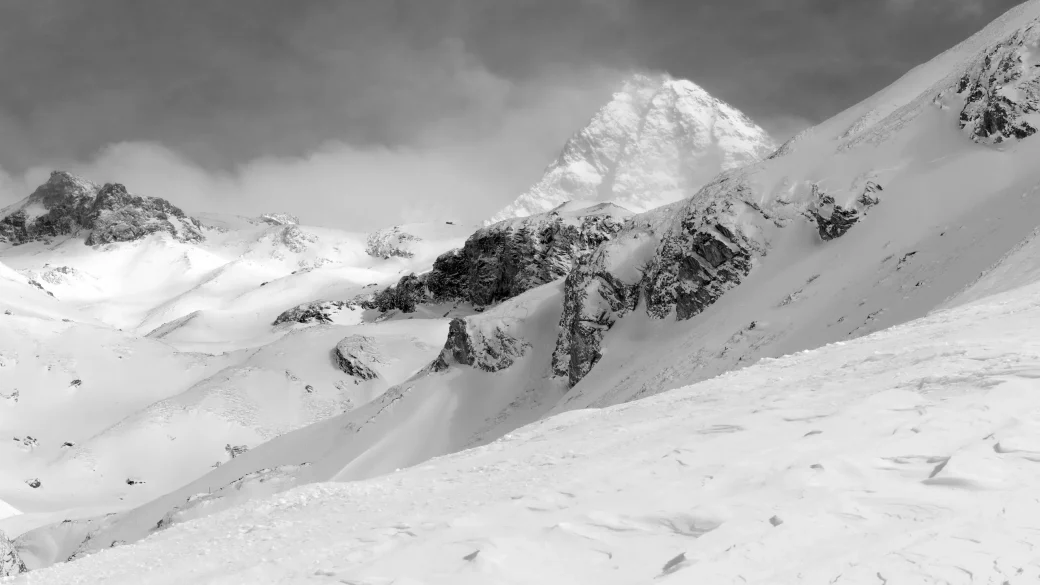
Thomas Plamberger, 36, stood trial in February at the Innsbruck Regional Court on a charge of homicide by gross negligence following the death of his girlfriend, Kerstin Gurtner, 33, who froze to death near the summit of Grossglockner, Austria's tallest mountain. According to The New Yorker's account of the proceedings, Gurtner died a few dozen yards from the peak after Plamberger left her at roughly 2 a.m. on a winter night, summited, descended to a warming hut on the far side, and called rescuers around 3:30 a.m.
The case is unusual on procedural grounds alone. Hundreds of hikers, climbers, and skiers die in the Austrian Alps each year, and criminal charges almost never follow. The trial drew a crowded courtroom and international press because it tested a rare question: when does an Alpine death become a crime rather than an accident.
A trial built for speed
The presiding judge, Norbert Hofer, oversees a court jurisdiction dedicated to mountain, avalanche, climbing, cable-car, and ski accidents. He signaled he wanted the matter resolved in a single day, with no jury and a verdict delivered by the judge alone. Hofer, himself an alpinist and mountain-rescue volunteer, told the courtroom he considered himself capable of ruling with full objectivity and that he would not be swayed by the media coverage the case had attracted.
That structure, a specialized single-judge court moving through a homicide case in one sitting, reflects how deeply Austria has institutionalized the handling of mountain incidents. The country's terrain makes such cases routine enough to warrant a dedicated bench.
The competing accounts
Prosecutor Johann Frischman laid out a complaint alleging that Plamberger, acting as the responsible guide on the ascent, made nine serious mistakes and then left Gurtner alone in a state described as unprotected, exhausted, hypothermic, and disoriented.
Defense lawyer Kurt Jelinek rejected that framing entirely. He described Gurtner as a strong alpine athlete who had planned the climbs with his client as an equal, and characterized her death as a tragic accident. By his account, she collapsed on the mountain and urged Plamberger to go for help. Jelinek argued that his client had already been punished by a media prejudgment before any verdict, and now faced up to three years in prison.
Plamberger himself made a brief statement to the court. "I am infinitely sorry for what happened and how it happened," he said, adding that he had loved Gurtner.
'Alpine divorce' and the public frame
As the death became an international scandal, discussion turned to what The New Yorker described as the phenomenon of "alpine divorce," the climb from which only the man returns. The framing captured why the case resonated far beyond Austria: it sits at the intersection of a fatal accident, a domestic relationship, and the ambiguity of who bore responsibility high on a mountain in the dark.
Coverage split along regional lines. Reports in Austria and Germany were comparatively restrained, often withholding the climbers' first names. The wider international press, including outlets cited in the account such as the New York Post, the Daily Mail, and the Hindustan Times, ran far more aggressive headlines and pulled photographs of both climbers from social media.
An evidentiary trail on Instagram
Social media became central to the case. Both Plamberger and Gurtner had left a detailed public record of their climbing history, and for investigators and observers alike, Instagram served as a primary source of information. Austrian privacy law tends to discourage journalists from probing too aggressively, but reporters retrieved material from the couple's accounts.
Grossglockner itself complicates the picture. The mountain is heavily trafficked, with an estimated 9,000 ascents per year, and much of the popular south side has functioning cellphone reception and twenty-four-hour mountain webcams. A climber in trouble can, in principle, call for help from near the summit. That accessibility is part of what makes the timeline, the hours between Plamberger leaving Gurtner and the rescue crew reaching her body, so central to both the prosecution and the defense.
What the case tests
The legal question is narrow and consequential: whether a climbing partner in a private ascent can be held to the standard of a responsible guide, and whether the decisions made in extreme conditions cross from misfortune into negligence. For a country where alpine culture functions almost as a national institution, and where the assumption of mutual aid runs deep, the answer carries weight beyond the two people on the mountain that night.