
Why NPR’s Tiny Desk Concert Featuring The War and Treaty Signals a Shift in Soul Music Distribution
The War and Treaty's Tiny Desk performance demonstrates NPR's content monetization strategy through premium artist partnerships, live recording infrastructure, and cross-platform distribution designed to drive NPR+ subscriptions and sponsorship revenue.

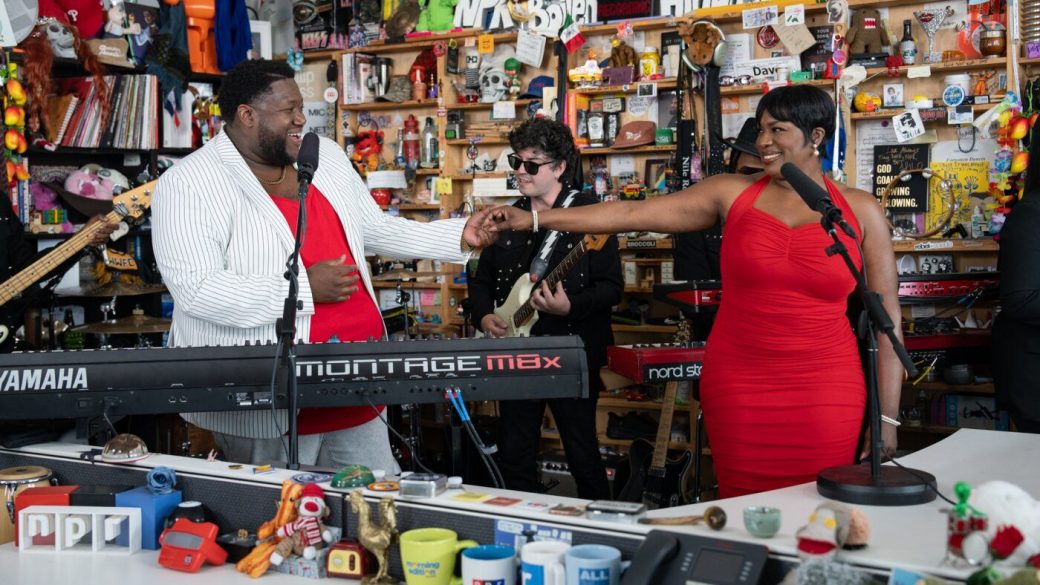
The War and Treaty's July 2026 Tiny Desk performance represents a strategic inflection point in how legacy media platforms monetize artist content and build audience loyalty in the streaming era.
NPR's Tiny Desk series has evolved into a significant content asset. The concert, filmed at NPR Music headquarters and featuring the Nashville-based husband-wife duo Michael and Tanya Trotter alongside a nine-piece ensemble, generated live-recorded content with measurable reach and engagement value. The performance qualifies as premium cultural IP—intimate, broadcast-ready, and designed for cross-platform distribution.
From a business perspective, this placement matters. NPR's Tiny Desk franchise has become a funnel for listener acquisition and retention. The series drives subscription conversions to NPR+, monetizes through sponsorships (evident in the embedded sponsor messaging), and generates downstream revenue through podcast syndication and streaming platform licensing deals. The inclusion of a high-profile artist appearance—particularly one drawing local family and media figures including DJ Donnie Simpson—amplifies the event's cultural capital and press coverage potential.
The Trotter duo's five-song set list, "Are You Ready to Love Me?," "Five More Minutes," "Don't Say Goodbye," "Shouldn't Have," and "High Heels," showcases genre hybrid positioning: retro soul merged with rock, country, Americana, R&B, and funk. From a market positioning angle, this eclecticism reduces niche risk and widens audience aperture—a deliberate commercial strategy in an era where pure-genre artists face narrower listener pools.
Michael Trotter's songwriting origin story—learning piano in Iraq during military service, later addressing PTSD and homelessness in "Five More Minutes"—carries narrative weight. However, the financial reality is more pragmatic. Artist storytelling functions as content differentiation in saturated markets. The emotional authenticity reads as genuine, but from an investor lens, it serves a clear purpose: it creates media hooks and justifies higher concert ticket premiums and merchandise margins.
The production infrastructure reveals NPR's resource commitment: a dedicated producer, director, audio director, videographers, and series editorial staff. This overhead is justified only if the content achieves measurable KPIs—stream counts, click-through rates to NPR+ signups, and advertiser brand lift. The Tiny Desk catalog has collectively reached tens of millions of views, making it a proven revenue driver.
What's notably absent: any public disclosure of financial terms between NPR and the artists, or licensing fees paid by platforms acquiring the content. This is standard industry opacity. The Trotters' commercial upside depends on downstream monetization: Spotify playlist inclusion, YouTube revenue share, and increased ticket price leverage from the NPR credential. Whether those downstream benefits offset the opportunity cost of the live performance time remains unquantifiable without access to their management's deal sheets.
The Asia angle is marginal here. Neither the artists' current tour footprint nor NPR's content distribution strategy prioritizes Asian markets with the same intensity as North American and European territories. However, NPR's digital distribution does reach diaspora audiences; Vietnamese, Indian, and Korean music lovers in the U.S. and Singapore increasingly consume Tiny Desk content, making it a soft-power play in cultural influence that downstream generates subscription value.