
ASEAN, major powers address maritime security, cyber threats at annual forum
Foreign ministers from major powers gathered in Manila for ASEAN's annual Regional Forum on July 23, addressing maritime tensions, cyber security threats, and the fallout from Middle East energy instability as the region confronts growing geopolitical risks.

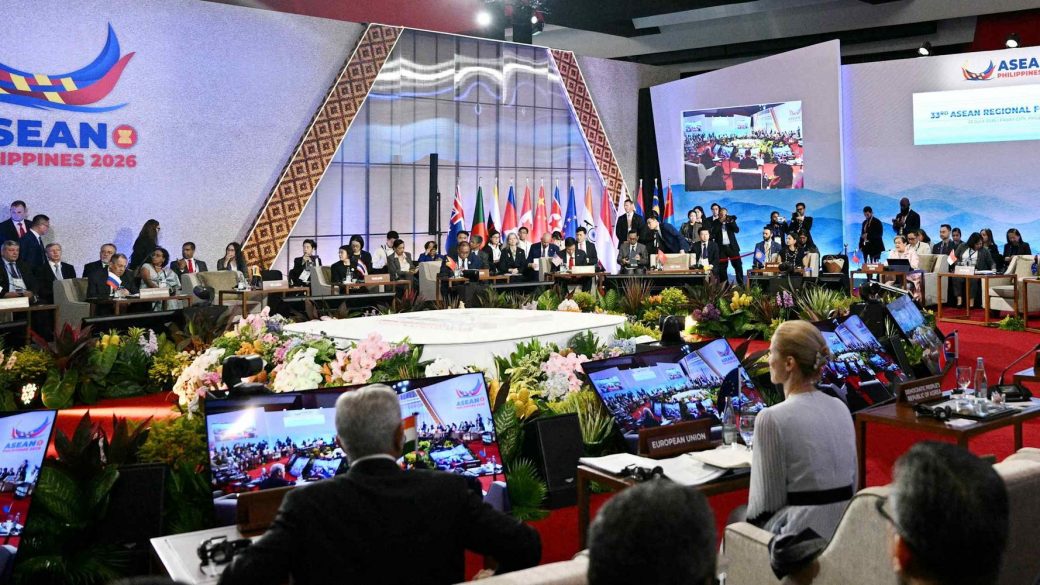
Foreign ministers from major powers convened in Manila on July 23 for the ASEAN Regional Forum, focusing on maritime security, cyber threats, and broader geopolitical challenges facing Southeast Asia.
The talks brought together regional and global officials as the bloc confronts multiple overlapping crises: escalating tensions in the South China Sea, the Middle East energy situation, and a surge in online scams targeting the region.
Maritime security dominated discussions, with the South China Sea remaining a flashpoint. Competing territorial claims and military activities in the waterway have intensified diplomatic friction, particularly between China and the U.S. The energy crisis—linked to Middle East instability—adds economic pressure on ASEAN economies heavily dependent on oil and gas imports.
Cyber security emerged as an equally pressing concern. Online fraud schemes targeting individuals and businesses have grown significantly across the region, prompting calls for coordinated law enforcement and information-sharing frameworks among member states and external powers.
The forum reflects ASEAN's evolving security calculus: the bloc seeks to maintain dialogue with major powers—including the U.S., China, India, and Japan—while managing their competing strategic interests in Southeast Asia. These annual meetings serve as a platform for confidence-building, though they rarely produce binding commitments or concrete dispute resolutions.
Participating governments used the gathering to reaffirm existing partnerships and probe alignments on contentious regional issues. The breadth of agenda items underscores the interconnected nature of modern security threats, where traditional geopolitical rivalry intersects with transnational risks like cybercrime.
ASEAN's balancing act remains delicate: the bloc depends on trade and investment from multiple powers while seeking to prevent any single actor from dominating the region. These forums provide a diplomatic valve, though whether they translate into substantive policy shifts remains uncertain.