
Tesla pushes back volume production targets as capital spending nearly triples
Tesla delayed volume production of its Cybercab, Tesla Semi, and Megapack 3 energy-storage system to beyond 2026. The automaker's capital spending nearly tripled to $25 billion annually while net income declined and free cash flow turned negative.

Tesla will not reach volume production of three flagship products—the Cybercab, Tesla Semi, and Megapack 3—in 2026, the company disclosed in its second-quarter shareholder letter published Wednesday. It also removed language about its Optimus humanoid robot reaching volume production this year.
The delays arrive as Tesla reported capital expenditures more than doubling and negative free cash flow of $1 billion in the second quarter. The company plans to spend $25 billion on capital investments in 2026, roughly three times its historical annual spending.
Tesla attributed the Cybercab and Semi delays to battery constraints, specifically around the company's 4680 cell production. The company began assembling the first production Cybercabs at its Austin factory earlier this year but is still building out manufacturing lines for the Semi and Optimus. Tesla offered no explanation for postponing Megapack 3 volume production. CEO Elon Musk characterized Optimus as particularly challenging: "This is going to be the hardest product to scale manufacturing that we've ever made at Tesla, because everything on the robot is new," he said on a Wednesday conference call.
In January, Tesla had publicly stated the Cybercab, Semi, and Megapack 3 would reach volume production in 2026. The company signaled this shift in strategy as it transitions from selling EVs and energy storage to emphasizing AI and robotics.
Despite the production setbacks, Tesla's second-quarter financial results showed mixed performance. Revenue rose 26% year-over-year to $28.2 billion from $22.5 billion in the same period last year. Automotive revenue climbed to $20.5 billion from $16.6 billion, driven by deliveries exceeding 480,000 vehicles—a gain of more than 120,000 from the first quarter and Tesla's strongest quarterly result since Q3 2024.
Record vehicle sales in markets outside the U.S. supported the growth, including South Korea, Australia, Colombia, Japan, Taiwan, Thailand, Portugal, the Philippines, Chile, Slovenia, and Lithuania. Energy storage and solar revenue also grew 13% to $3.1 billion. Full Self-Driving (Supervised) subscriptions reached 1.48 million, up 56% year-over-year.
Profit margins compressed significantly. Net income fell 5% to $1.1 billion from $1.16 billion a year prior. Operating expenses ballooned 47% to $4.3 billion. The company's operating income dropped 57% to $398 million from $932 million in Q2 2025.
Free cash flow deteriorated sharply. Tesla generated negative free cash flow of $1 billion in Q2 2026, reversing the $1.44 billion in positive free cash flow from Q1 2026 and the $146 million from Q2 2025. CFO Vaibhav Taneja previously indicated negative cash flow would persist through the remainder of 2026 due to new product development spending.
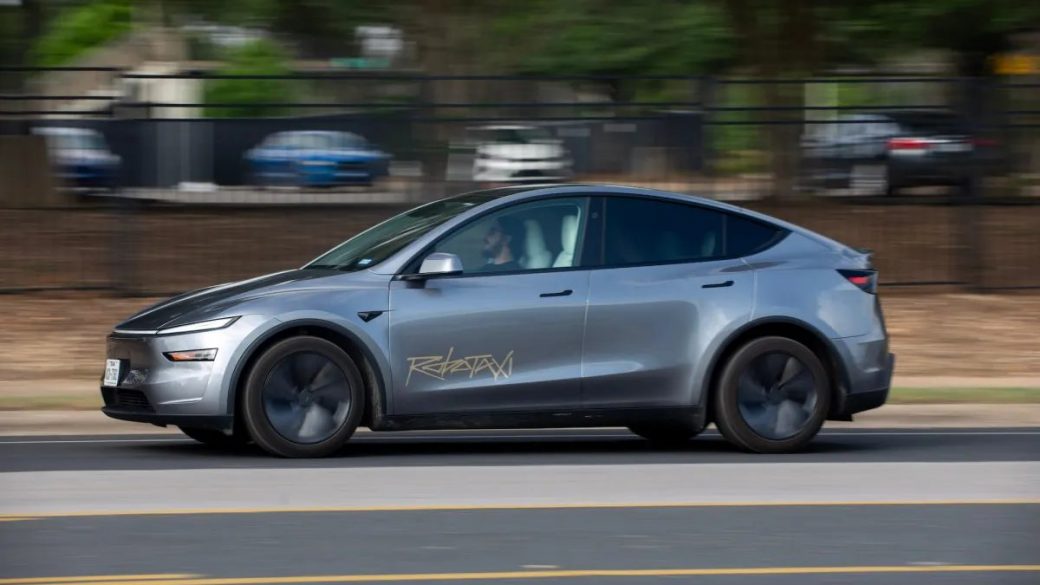
To support its strategic pivot, Tesla stopped production of its flagship Model S sedan and Model X SUV at its Fremont factory this spring, repurposing the facility for Optimus manufacturing. The company is also expanding its Tesla Robotaxi service to additional cities with limited vehicle deployments and continuing to push Full Self-Driving (Supervised) adoption among owners.