

Russia’s Ukraine Invasion: Origins, Escalation, and the Geopolitical Realignment
Russia's 2022 invasion of Ukraine represents a fundamental shift in global order, rooted in decades of geopolitical tension. The conflict has evolved into a protracted war featuring advanced drone strikes, military leadership changes, and broader strategic realignments involving NATO, energy markets, and Asia-Pacific supply chains.

The Historical Context
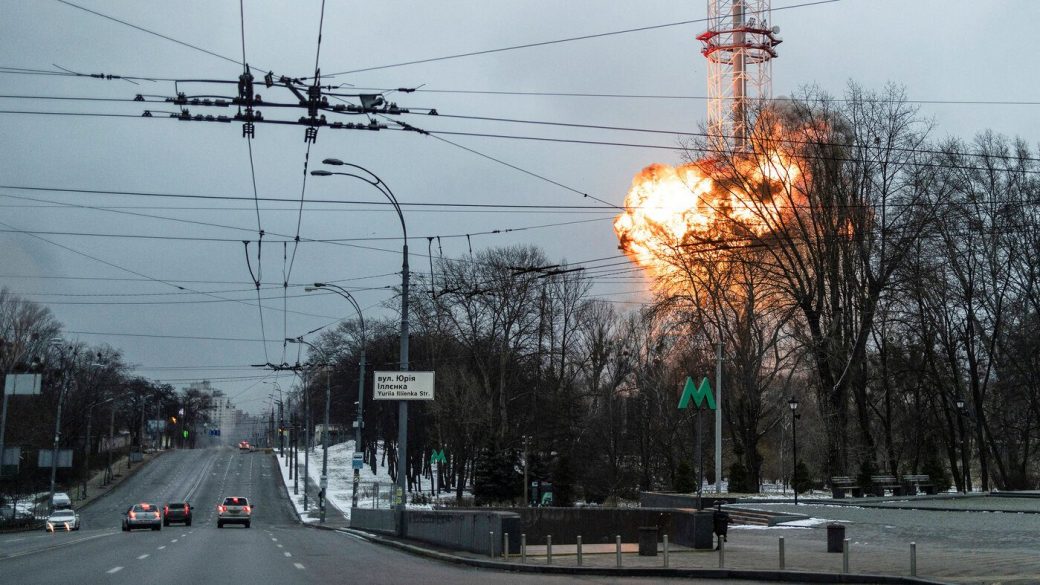
Russia's 2022 invasion of Ukraine represents a fundamental rupture in post-Cold War geopolitics. According to analysis from NPR's investigative coverage, the conflict's origins stretch back decades, with competing visions of Ukraine's political and economic alignment at the core. The invasion is not merely territorial conquest but, as U.S. officials have framed it, a shift in "the world order" itself.
Ukraine's geographic position—situated between NATO-aligned Europe and Russian sphere of influence—has made it a strategic flashpoint. Russia views NATO expansion toward its borders as a security threat; Ukraine and Western powers see the country's sovereignty as non-negotiable. This fundamental disagreement has driven escalating tensions since Ukraine's 2014 Euromaidan protests and the subsequent Russian annexation of Crimea.
Military Dynamics and Weaponry
The conflict has evolved into a protracted attritional war, forcing technological innovation on both sides. Ukraine has deployed long-range drone strikes penetrating up to 1,200 miles into Russian territory, targeting oil refineries and military infrastructure. This capability represents a significant shift in asymmetric warfare—smaller forces using precision strikes against larger adversaries.
The U.S. decision to allow Ukraine to produce Patriot air-defense systems marks a rare escalation in military support. According to defense analysts at the Center for Strategic and International Studies, the Patriot system is among the world's most effective air-defense platforms, tested in conflicts from the Middle East to Eastern Europe. However, production remains a bottleneck: manufacturing capacity is limited, timelines extend years, and unit costs are substantial. This constraint shapes the pace at which Ukraine can enhance its defensive posture.
Russia has sustained large-scale missile and drone campaigns against Ukrainian targets. NPR reported that Russia launched 41 missiles and 125 attack drones across Ukraine in a single overnight operation in July 2026, demonstrating continued capacity for mass strikes despite military losses.
Political and Strategic Shifts
Ukraine's military leadership underwent significant reorganization in mid-2026 following sustained public pressure. President Volodymyr Zelenskyy dismissed his defense minister and replaced the commander-in-chief amid nationwide protests over military strategy. These moves reflect tensions between civilian leadership and military command on how best to prosecute the war—a recurring dynamic in prolonged conflicts where public opinion shapes strategic choices.
Simultaneously, Russia has pursued diplomatic overtures with North Korea, signaling attempts to rebuild coalition support despite international sanctions and isolation. The visit by North Korean Foreign Minister Choe Son Hui to Moscow in July 2026, without an obvious multilateral pretext, raised speculation about potential military cooperation or Kim Jong Un's possible visit to Russia.
Implications for Global Order
The invasion has exposed fractures in the post-1991 international architecture. NATO expansion accelerated, with Finland and Sweden joining the alliance. Energy markets experienced severe disruption, particularly in Europe's reliance on Russian oil and gas. Economic sanctions imposed by Western powers targeted Russian financial systems, though enforcement has proven uneven.
For Asia-Pacific economies, the conflict created competing pressures: alignment with Western sanctions regimes versus continued trade dependence on Russia. Energy importers faced higher costs; defense-adjacent industries benefited from increased spending; technology firms navigated export controls.
The conflict remains unresolved, with territorial gains and losses fluctuating seasonally. Neither side has demonstrated capacity to achieve maximalist objectives, suggesting prolonged attrition as the likely trajectory absent major geopolitical shifts.