

Indian Opposition Stages Parliament Disruption Over Student Protest Crisis
Indian opposition lawmakers disrupted parliament to back student protesters demanding education policy changes, escalating pressure on the Modi government amid broader exam-related controversy.

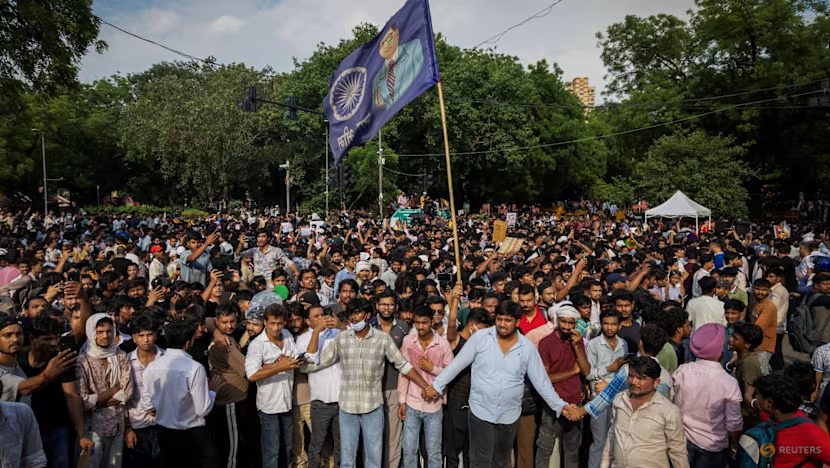
Indian opposition parties disrupted parliamentary proceedings to amplify student protests and apply pressure on Prime Minister Narendra Modi's government over an ongoing education crisis.
The parliamentary disturbance centered on opposition lawmakers' solidarity with student demonstrators protesting national examination policies. The timing reflects escalating friction between the ruling coalition and opposition benches over education administration, with the disruption serving as a political lever to force government response.
Student protesters have mobilized around examination-related grievances, with the controversy gaining sufficient traction to spill into legislative debate. Opposition parties seized the moment to convert street-level unrest into parliamentary pressure, a tactical maneuver designed to extract policy concessions or administrative accountability.
The disruption highlights the intersection of student activism and electoral politics in India. When grassroots movements gain momentum, opposition blocs typically attempt to capitalize politically while simultaneously demonstrating responsiveness to constituent concerns. This dual objective—genuine advocacy for protesters paired with strategic opposition positioning—characterizes the current standoff.
Education policy disputes have historically triggered significant mobilization in India, where competitive examination systems determine access to higher institutions and civil service positions. The scale of student participation suggests the underlying grievance resonates beyond isolated discontent, though precise enrollment or participation figures remain unclear from available reporting.
The government's response trajectory will signal tolerance for parliamentary obstruction and willingness to negotiate on education reforms. Previous crises involving student unrest have resulted in ministerial reshuffles, policy reviews, or tangible regulatory adjustments, depending on political calculus and administrative capacity.