

India’s Services Exports Near Parity With Goods, Exposing Manufacturing Gap
India's services exports are close to overtaking goods exports for the first time, exposing the limits of a manufacturing push that has failed to match IT-led growth.

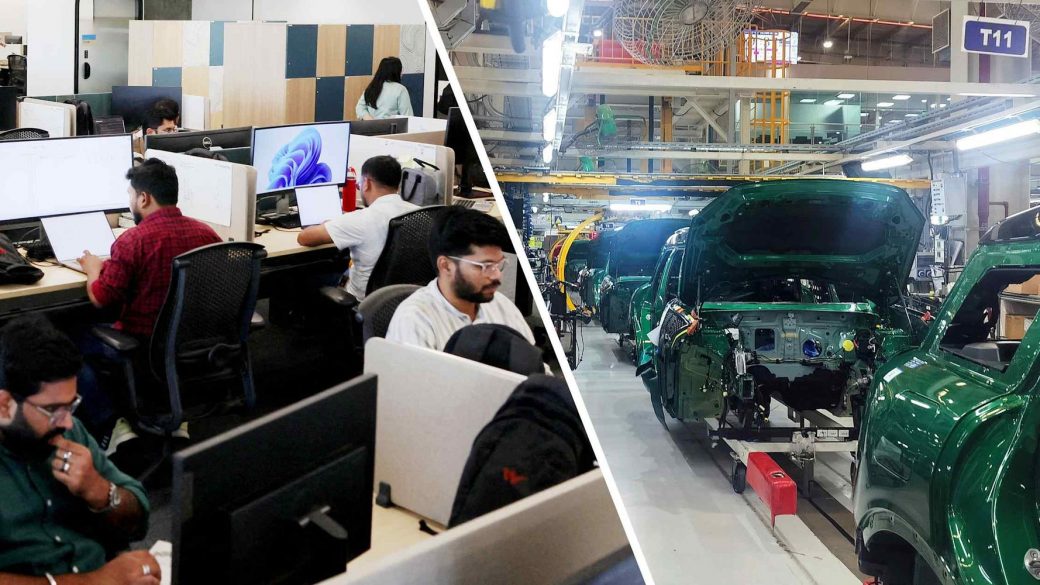
India's services exports are approaching the point of overtaking merchandise exports for the first time, a shift that lays bare how much the country still leans on information technology for growth even as New Delhi spends heavily to build a manufacturing base.
Over the past 12 years, services exports have expanded at a compound annual rate of 9.3%, according to Nikkei Asia. Goods exports grew at barely a third of that rate over the same span, despite years of policy incentives aimed at turning India into a factory hub.
The numbers behind the shift
The divergence points to a structural pattern rather than a one-off swing. Software services, back-office operations, and IT consulting have carried India's external trade for more than a decade, and their momentum has not eased even as global demand cycles turned. Merchandise exports, by contrast, have stalled in relative terms.
That gap matters because it runs against the direction policymakers have pushed. Programs designed to attract factory investment and lift manufacturing's share of the economy have not produced export growth on the scale services delivered largely on their own.
Why the manufacturing push has lagged
The data does not, on its own, explain why goods exports underperformed. But the contrast raises a familiar question for economies trying to industrialize at scale: whether incentive schemes can offset the friction of infrastructure gaps, input costs, and global competition from established manufacturing centers.
Services, which require less physical infrastructure and can scale through skilled labor and connectivity, have proven easier for India to grow. The trade-off is that IT-led exports concentrate benefits among a narrower slice of the workforce than mass manufacturing would.
What comes next
The near-parity between services and goods exports arrives as the IT sector itself faces pressure. Indian IT firms have been increasing acquisitions as AI reshapes their growth models, and some Indian companies are turning to Chinese large language models to manage rising AI costs, Nikkei Asia reported. Those dynamics complicate any assumption that services growth will continue at its recent pace indefinitely.
For now, the crossover underscores a persistent reality: India's most reliable export engine remains the one built on code, not factories. Whether the manufacturing agenda can close that gap will depend on more than the incentives deployed so far.