
US Becomes Top Helium Supplier to Asia’s Chipmakers as Iran War, China Curbs Bite
US customs data shows America is now the top helium supplier to Japan, South Korea and Taiwan as the Iran war and Chinese export curbs tighten chip-gas supply.

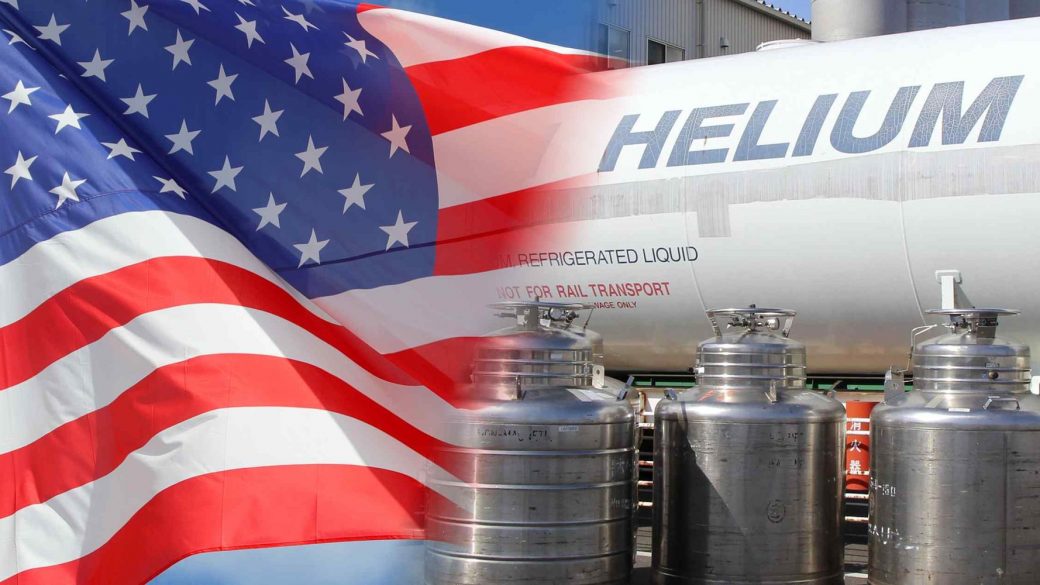
The United States has become the leading supplier of helium to Japan, South Korea and Taiwan, according to a Nikkei Asia analysis of customs data, as the Iran war and Chinese export restrictions tighten the global market for a gas that chipmakers cannot manufacture without.
Helium is not a headline material in the way that advanced lithography tools or high-bandwidth memory are, but semiconductor fabs depend on it. The gas is used for cooling, leak detection and creating controlled atmospheres during chip production. When supply gets constrained, it hits the same fabs that turn out the processors and memory sitting inside phones, servers and cars.
Why the balance shifted
Two pressures are reshaping who sells helium to Asia. The first is the Iran war, which Nikkei reported has squeezed global supply and added to shortages of related inputs such as helium tanks and solvents for tech suppliers. The second is China, which has moved to block exports of helium, according to Nikkei's reporting, removing a supply channel that Asian buyers had leaned on.
With those routes narrowing, buyers in the region's three main chipmaking hubs have turned to American sources. The Nikkei analysis of customs data found the US now sits at the top of the supplier list for all three markets, and the outlet reported that the country could pick up additional share if the current constraints persist.
What it means for the chip supply chain
Japan, South Korea and Taiwan together account for a large slice of the world's most advanced chip and memory output. Concentrating a critical input on a single dominant supplier reduces the immediate risk of running short, but it also trades one dependency for another. Buyers that spent recent years diversifying away from concentrated sources now find their helium increasingly routed through the US.
The shift is less about a deliberate American push and more about what remains available. Iran-linked disruption and Chinese restrictions have thinned the field, and US producers are filling the gap by default rather than by design.
For now, the practical takeaway for the region's fabs is supply continuity: the gas is still flowing, and it is flowing from America. The open question is how durable that position proves if either the geopolitical picture around Iran eases or China reopens exports, either of which could redraw the supplier map again.