

Maine Democratic Party Accuses Platner Campaign of Meddling in Replacement Process
The Maine Democratic Party says Graham Platner's campaign tried to influence who replaces him if he exits the Senate race. His team denies it.

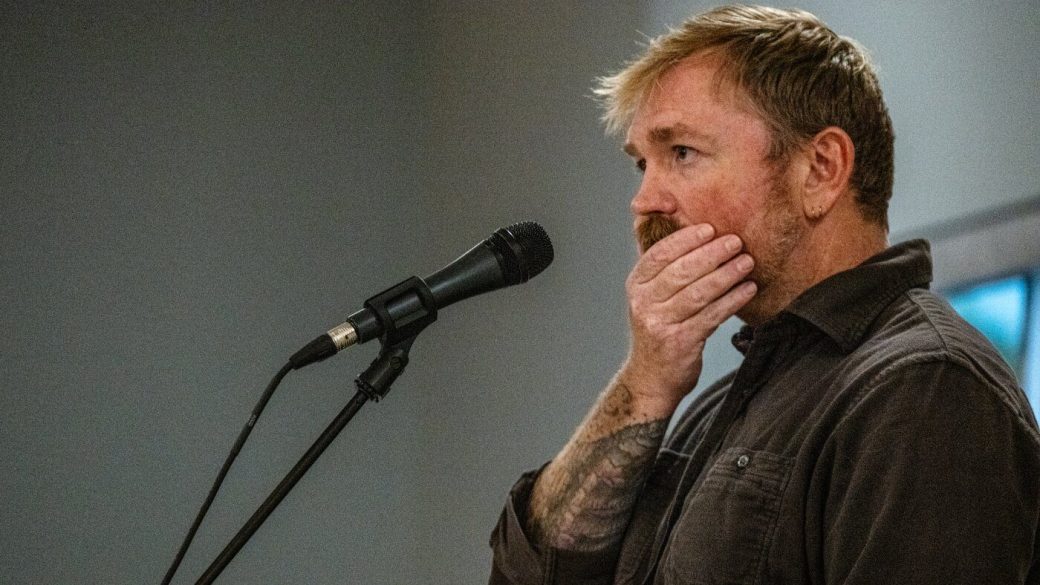
The Maine Democratic Party publicly accused U.S. Senate candidate Graham Platner's campaign on Tuesday of attempting to steer the process for choosing a replacement nominee, should Platner exit the race. In a video posted to social media, party Executive Director Devon Murphy-Anderson said Platner's team had made repeated contact to try to influence how a succession would unfold.
"Unfortunately, Graham Platner's team has repeatedly reached out to us in an attempt to put their thumb on the scale of what this process looks like," Murphy-Anderson said, adding that the campaign has no role in selecting the next nominee or defining the mechanics of that selection.
The Platner campaign did not respond to NPR's request for comment. In a statement to Politico, the campaign denied it was seeking to exert influence.
Pressure to withdraw
The dispute follows a Monday report by Politico detailing an allegation of sexual assault against Platner. In the days since, most prominent Maine and national Democratic figures have called on him to leave the race. Among them is Sen. Bernie Sanders, the Vermont independent who caucuses with Democrats and was one of Platner's earliest high-profile backers. Sanders said Tuesday that Platner should step aside.
Platner has until July 13 to withdraw in order for the party to name a new nominee. If he stays in past that Monday deadline, he remains on the November ballot. The state party has said it is developing a replacement process but will not release details publicly until Platner formally exits.
Who is lining up
Several candidates are already positioning themselves. Former Maine state Sen. Troy Jackson, who lost a bid for governor this year with Sanders' backing, told NPR's Morning Edition he sees himself as the strongest alternative to face incumbent Republican Sen. Susan Collins.
"I won two of the biggest cities, Bangor and Portland," Jackson said, arguing that his statewide reach and message align closely with Platner's campaign.
Nirav Shah, who ran Maine's public health agency during the COVID-19 pandemic and also lost a gubernatorial bid, told All Things Considered he is weighing a run as well. Shah said his priorities, including Medicare for all and corporate accountability, would translate from a state-level message to a national one.
The stakes
The seat matters to the broader Senate map. Democrats need a net gain of four seats to retake the majority, and party officials view Maine as central to that path. President Trump lost the state in 2024, and Democrats believe Collins could be vulnerable amid political headwinds facing Republicans.
The timing compresses the decision. Any replacement would inherit an abbreviated runway to organize a general-election campaign against a well-funded, long-serving incumbent, with the party's internal process still undisclosed and now under public scrutiny.